
Opettaja, Nyt
2025
Q-theatre
Play by Katariina Numminen
Direction: Milja Sarkola
Designers: Samu-Jussi Koski, Viljami Lehtonen, Heikki Paasonen, K Rasila, Maria Saivosalmi
On Stage: Satu Tuuli Karhu, Elina Knihtilä, Olli Riipinen, Eero Ritala
Premiere September 18th 2025
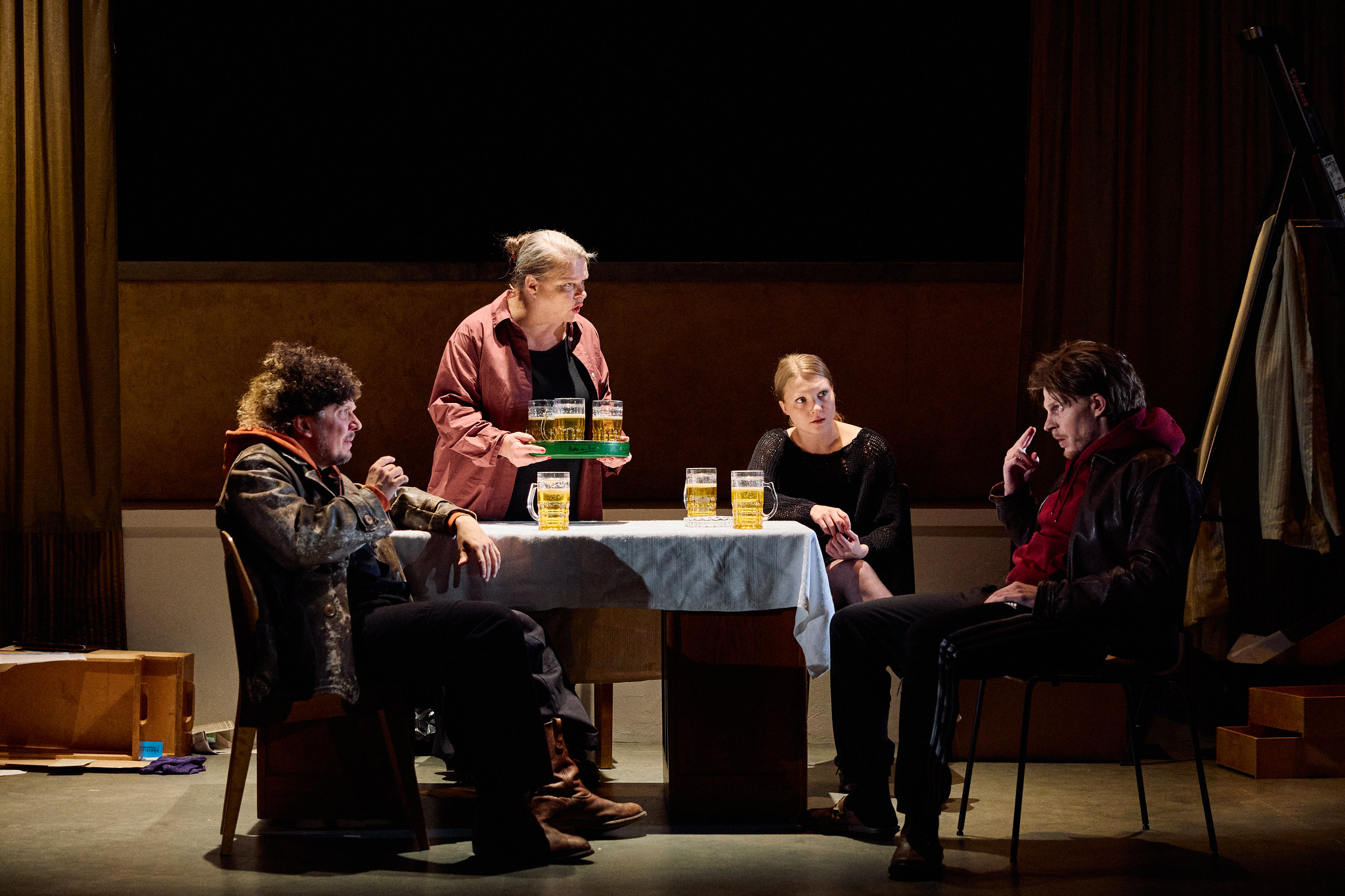
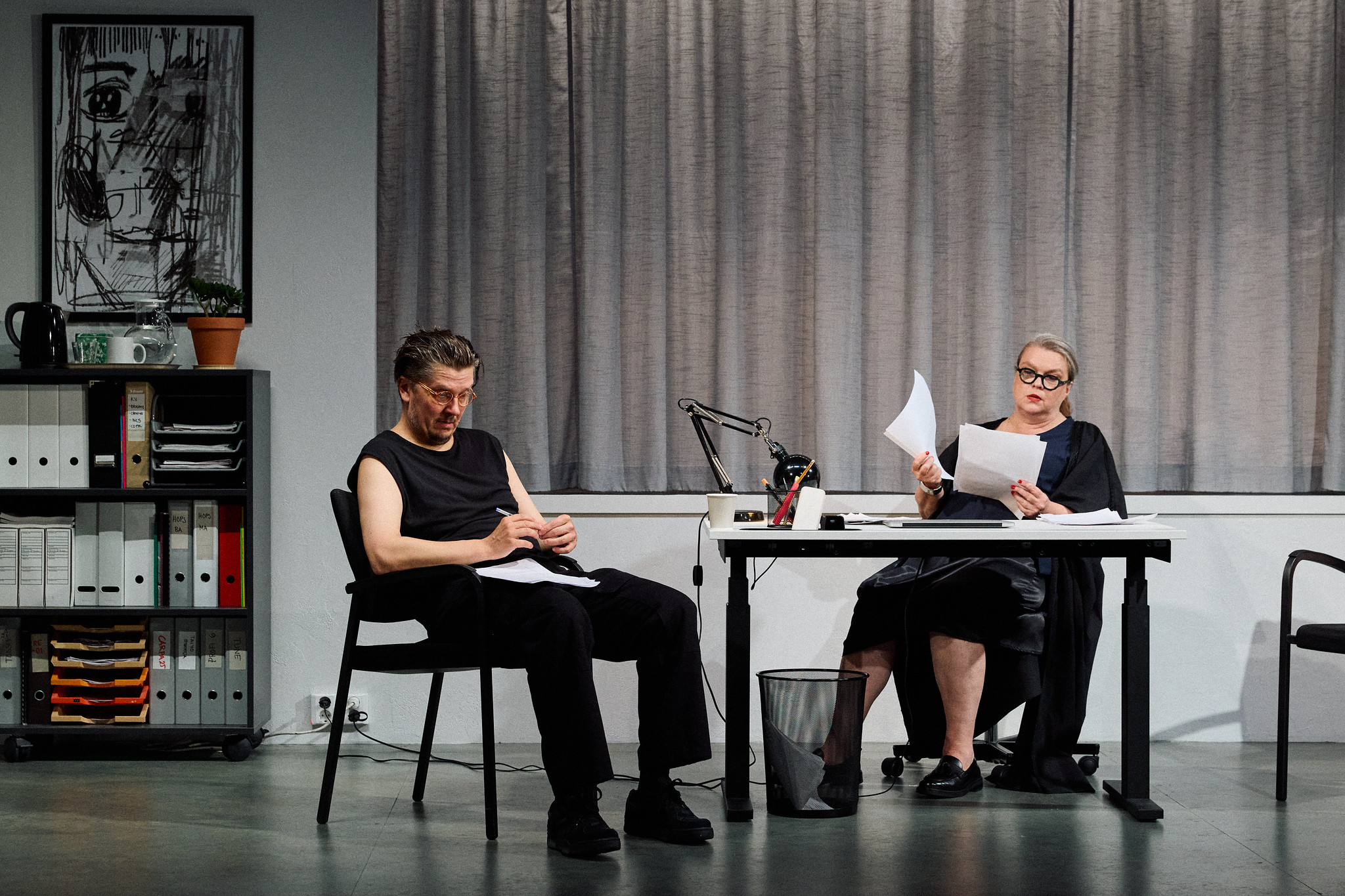
A three-act portrait of a teacher at an art institution, situated on the threshold between the old and the new world.
What can a teacher prepare and guide students for when the world is crumbling piece by piece?
What are we made of? Of quotations, citations, habits, and gestures—things inherited from others and picked up along the way. A fresco composed of tiny moments, reflecting time, age, memory, and generations.
When I received the text in front of me, I quickly understood that we were dealing with something truly special. It resonated with me on a very personal level, not only because of the improtant themes but as I too have studied and worked as a teacher at the Theatre Academy.
In form, the text is highly fragmentary, which created challenges for the sound design: the first act consists of 54 separate, unconnected scenes. I realised that a big task for me was to consider how to link these scenes together by finding their common nominators. Since the context is art education, I wanted to use only materials and aesthetic forms I had learned in art school. I dug out my old study notes and drew most of my ideas from them.
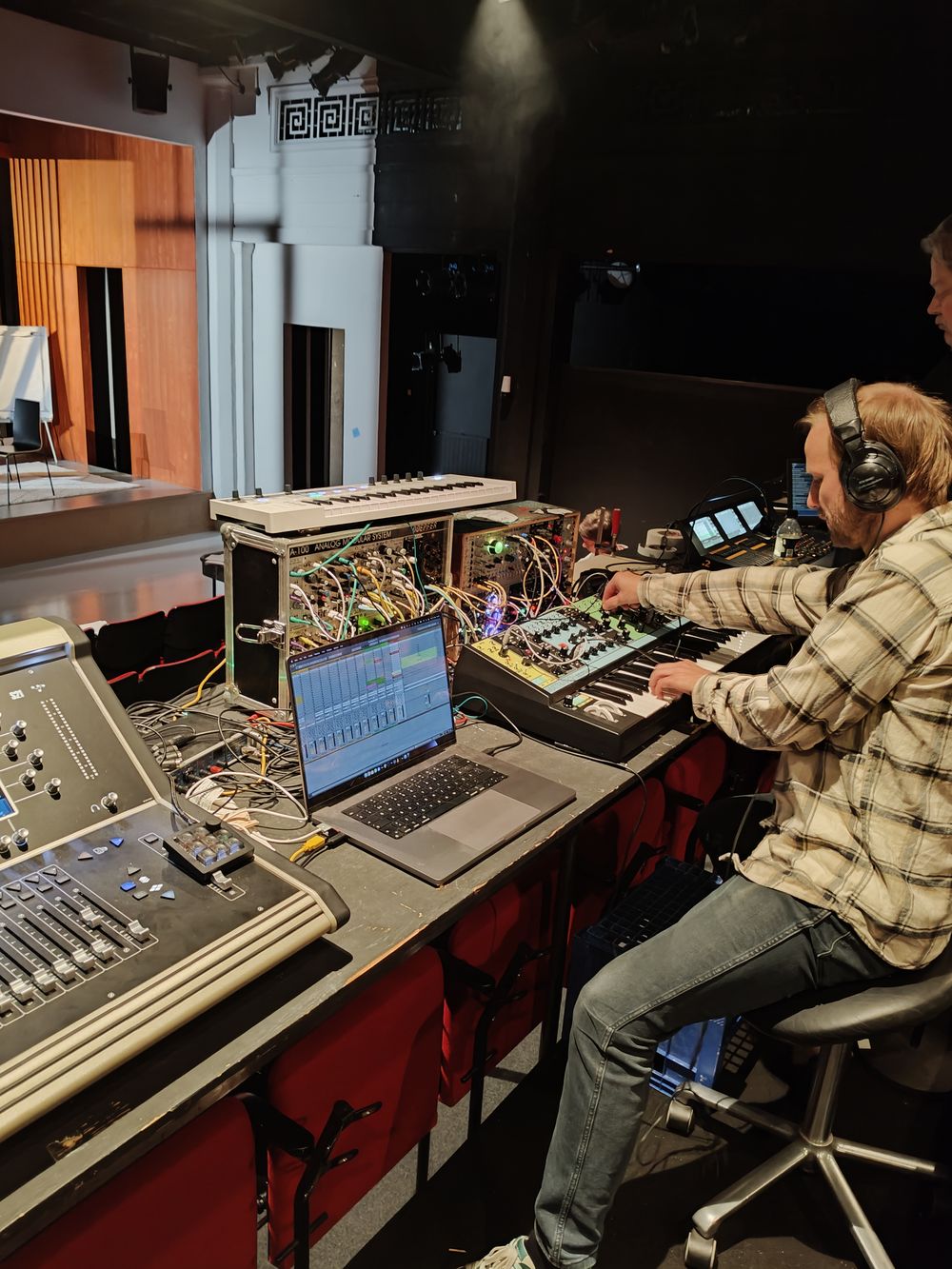
At the Theatre Academy I learned a great deal about sound synthesis, so I wanted to make use of my modular synthesiser. I ended up bringing almost my entire analog setup to the theatre. During rehearsals I experimented with various options that flirted with the aesthetics of sound art, but I soon realized that because the play’s structure is so fragmentary, this approach only made the viewing experience heavier. In the end, I decided to focus my professional skills on making the audience’s experience and interpretation clearer and more accessible.
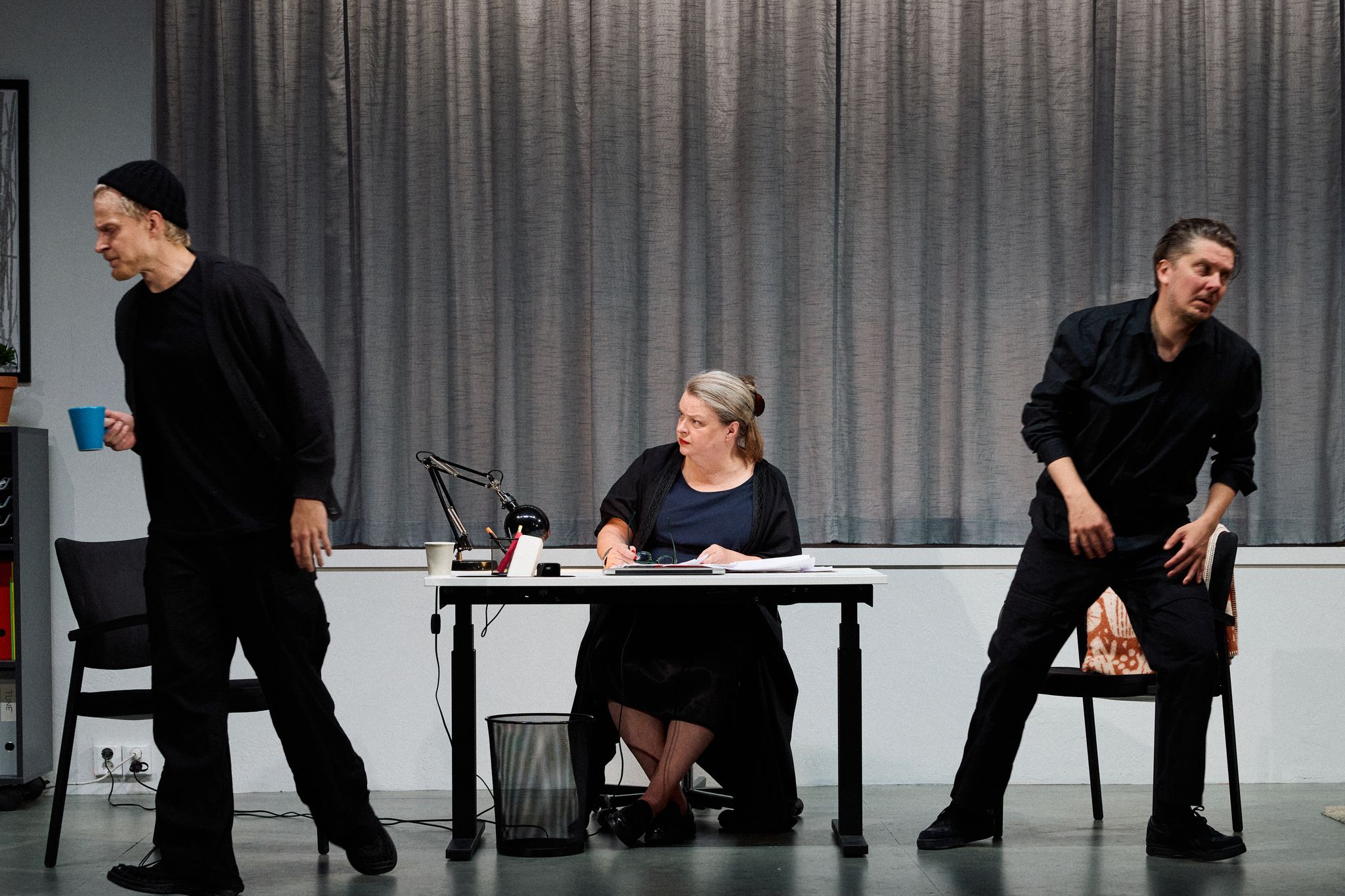
The first act was structured by sonic clicks and character themes. The clicks helped the audience understand that we were shifting from one scene to another and that the situation could change completely. The act also moves between two different time periods, and I distinguished them so that in the present day there is modern, abstract, minimalist music, while the 1980s are accompanied by more emotionally driven content and an organic soundscape.
A kind of overarching element in the act is the caretaker character, who operates on his own aesthetic level but functions as a binding and enabling force. During rehearsals, Plastikman’s track “Plasticity,” representing the acid house genre, was chosen as the caretaker’s theme. I wanted his theme to be something mechanical—something that persists and keeps things running. I found the track in my old “Minimalism and Repetition”-course notes from school, and it was particularly amusing to notice toward the end of rehearsals that while the track was playing, a teacher wrote on the flip chart the words “the meaning of repetition.” Through such coincidences, you know you are on the right path.
Originally, the piece was meant to be only a demo, and I intended to compose something similar myself. However, since the track worked so well as it was—both on stage and within the sound dramaturgy—I decided to leave it as the play’s only borrowed piece of music.
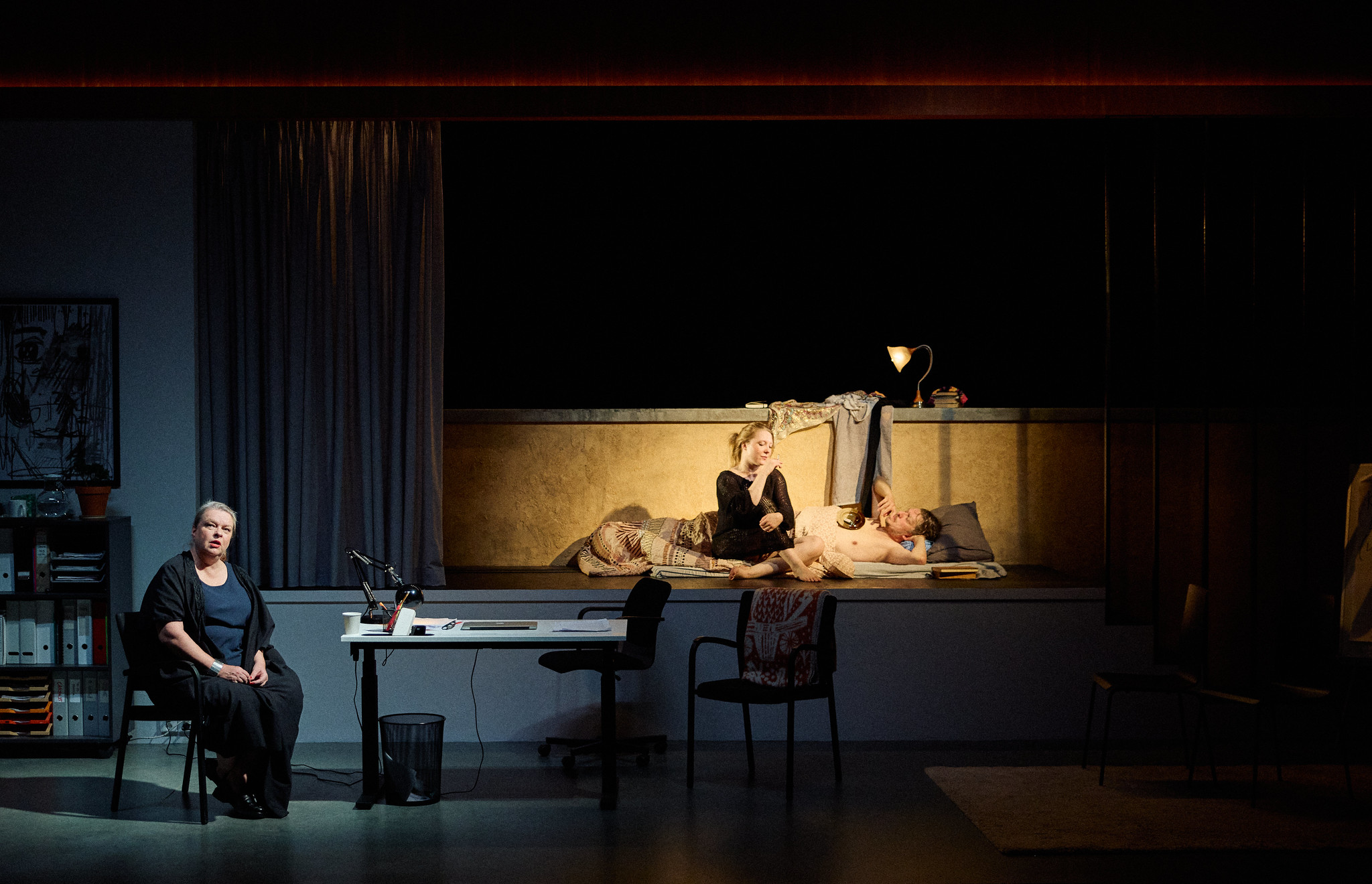
For the second act, I originally planned something like a wallpaper-like lament. During a joint pre-production meeting, Henryk Górecki’s Symphony No. 3 suddenly started playing in my head for some reason. Later, while browsing my old study notes, I noticed that the work was mentioned there several times as well. Once again, an interesting coincidence! However, during rehearsals, using the symphony itself felt too heavy, so I decided to compose a pastiche of it instead. I composed the section with saxophone because the act deals with generational experience, and in that same year, 2025, one of my former teachers—a saxophonist who had once inspired me to study sound design—passed away.
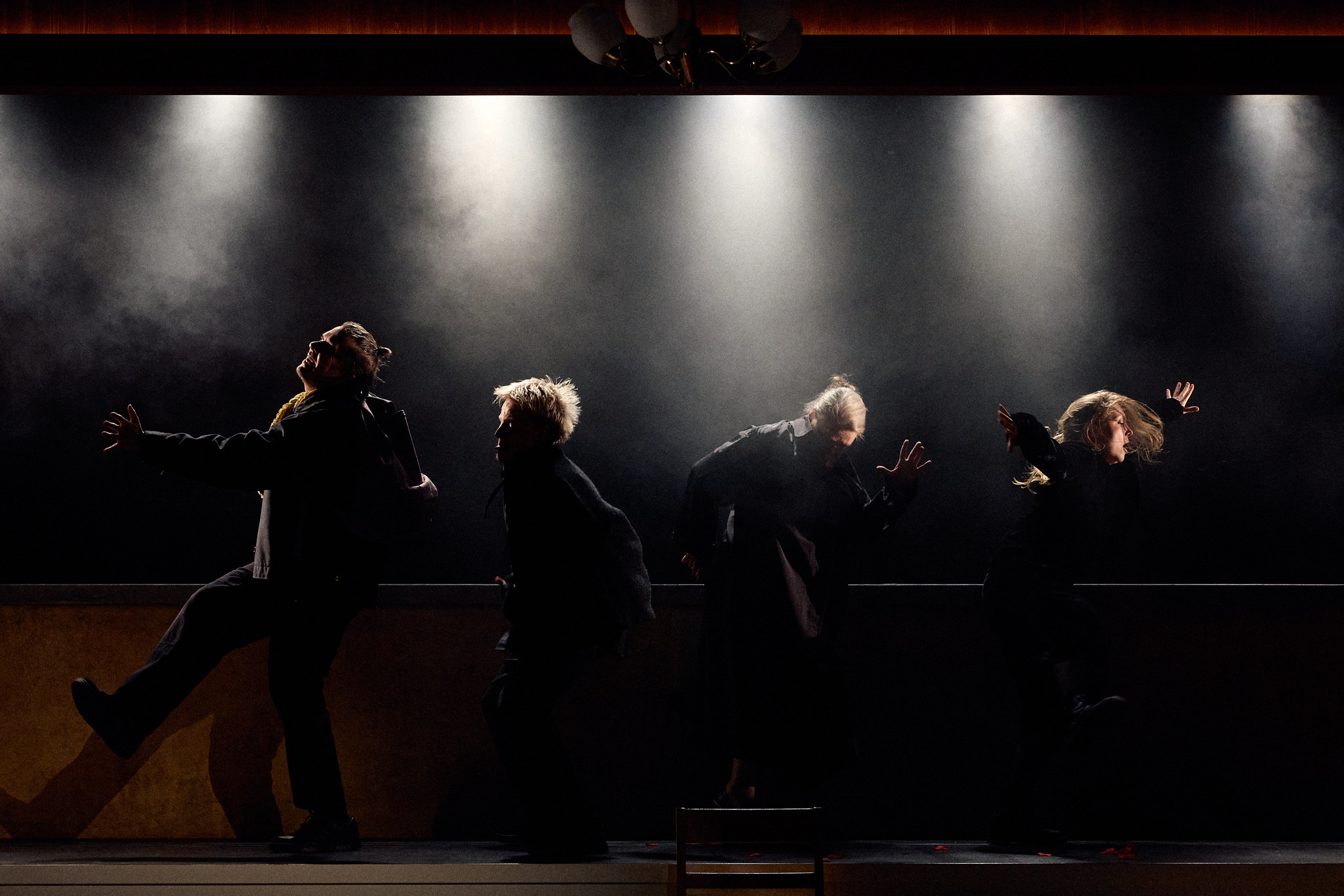
The theme of the third act was a procession. For this, I designed a musical progression in which various sonic gestures attach themselves and fall away, like an sonic organism moving through the act. In addition to different types of parade music, I was inspired by Mexican son jarocho fandango gatherings, where anyone can join in with a jarana-guitar and play for as long as they wish. I decided that the entire act should maintain the same tempo—perhaps even that the pulse should run uninterrupted throughout. I chose 100 bpm and was able to move organically from scene to scene by triggering and fading different loops, syncing them to this tempo. It became like one long, act-length sonic journey—or a “rodeo,” as mentioned in the play’s first act. Rarely does total consistency truly work, however, so in the end the pulse included several breaks, allowing space for the actors’ work.
All in all, creating this stage production was extremely important to me, and I am still deeply grateful to have been part of the process. Numminen’s magnificent text operates on so many levels that it has continued to inspire me in new ways long after the premiere. Combined with working alongside such an ambitious and wonderful working group, the process became one of the most significant of my professional career.
The sound design and music has been appraised by many and Apu-magazine wrote in their critic: “Viljami Lehtonen’s excellent sound design deserves special mention. In the first act, the soundscape sets the rhythm for the episodes; in the second, the music bursts delightfully wild.”
The sound design has also been nominated for the 2025 Säde Award.
See Next


